
A growing number of retirees are making housing decisions earlier than previous generations. Instead of waiting until health needs force a move, many older adults are choosing communities that combine independence, healthcare access, and long-term planning under one roof. That shift has fueled renewed interest in Life Plan Communities, formerly known as Continuing Care Retirement Communities (CCRCs).
For retirees who want stability, predictable access to care, and the ability to age in place, these communities offer an appealing alternative to piecing together housing and healthcare arrangements later in life.
What Is a Life Plan Community?
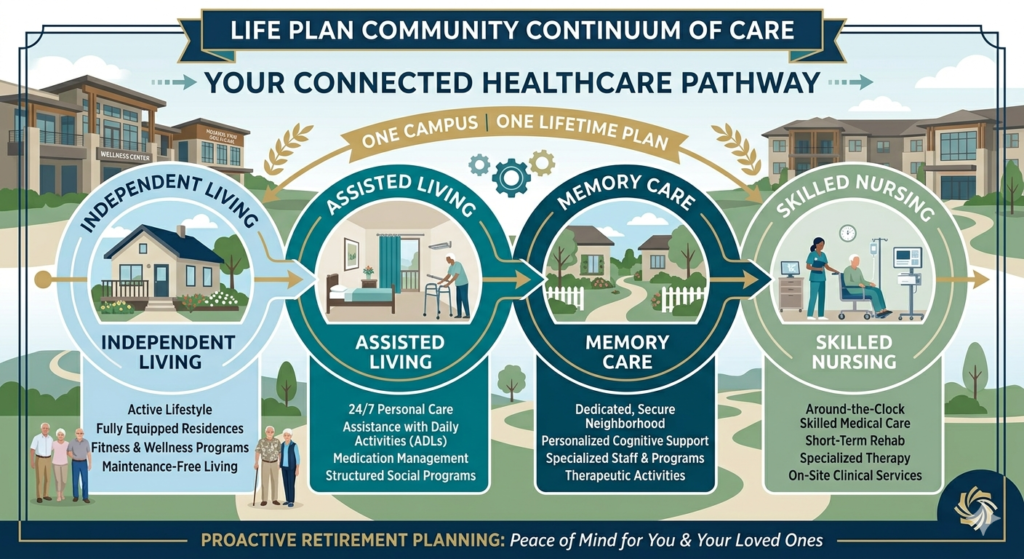
A Life Plan Community is a residential community designed to provide multiple levels of care within the same campus. Residents typically enter while living independently and can transition to assisted living, memory care, or skilled nursing services if their needs change.
Unlike traditional retirement housing, Life Plan Communities are built around continuity. Residents often remain within the same community for years, avoiding the disruption of relocating during a health crisis.
This model has become one of the most comprehensive forms of retirement living available in the United States.
Why More Retirees Are Considering Life Plan Communities
Several demographic trends are reshaping retirement planning.
Americans are living longer. Families are increasingly spread across different states. Healthcare costs continue to rise. As a result, many retirees are looking for solutions that reduce uncertainty.
A Life Plan Community can offer:
- Independent living residences
- Social and recreational programs
- Dining services
- Wellness and fitness amenities
- Assisted living support
- Memory care services
- Skilled nursing care
For many residents, the biggest advantage is knowing future care is available without needing another major move.

Understanding Life Plan Community Costs
One of the first questions prospective residents ask is whether a Life Plan Community is affordable.
Costs generally include:
Entrance Fees
Most communities require a one-time entrance fee. Depending on location, residence size, and contract type, fees can range from tens of thousands to several hundred thousand dollars.
Monthly Fees
Residents also pay monthly charges that often cover:
- Maintenance
- Utilities
- Dining plans
- Security
- Activities
- Access to healthcare services
The financial structure varies significantly from one community to another, making detailed review essential before signing a contract.
The Different Types of Life Plan Community Contracts
Not all Life Plan Communities operate the same way.
Extensive Contract
Often called a Type A contract, this option typically includes future healthcare services with relatively predictable costs.
Modified Contract
A Type B contract generally includes a limited amount of healthcare before additional charges apply.
Fee-for-Service Contract
Type C contracts often have lower entry costs but residents pay market rates when healthcare services are needed.
The best option depends on personal finances, health outlook, and risk tolerance.
Life Plan Communities vs Assisted Living
This comparison causes confusion for many families.
Assisted living communities primarily serve individuals who already need daily support. A Continuing Care Retirement Community (CCRC) is designed for individuals who are largely independent but want a long-term plan for future care.
Someone moving into assisted living may already require help with daily activities.
Someone moving into a Life Plan Community is often planning years or even decades ahead.
That distinction is central to understanding the value of the model.
Benefits That Often Get Overlooked
Discussions about costs frequently overshadow some of the most valuable advantages.
Built-In Social Connection
Loneliness remains one of the biggest challenges facing older adults. Life Plan Communities often provide clubs, volunteer opportunities, educational programs, and social events that help residents remain engaged.
Simplified Future Planning
Residents gain access to multiple levels of care within a familiar environment.
Potential Financial Predictability
Certain contract structures can help reduce uncertainty surrounding future healthcare expenses.
Reduced Burden on Family Caregivers
Adult children often report peace of mind knowing parents have access to support services if needs change unexpectedly.
Common Mistakes People Make When Choosing a Community
Even financially prepared retirees can make costly mistakes.
Focusing Only on Entrance Fees
A lower upfront cost does not always translate into lower long-term expenses.
Ignoring Financial Strength
Review audited financial statements and occupancy rates whenever possible.
Waiting Too Long
Many communities have waiting lists. Delaying research can limit available options.
Overlooking Contract Details
Refundability, healthcare coverage, and future fee increases vary significantly.
Careful review with a financial advisor and elder law attorney can prevent unpleasant surprises.
What Prospective Residents Frequently Miss
Many retirees compare floor plans, dining menus, and amenities but overlook operational factors.
Questions worth asking include:
- How quickly can residents access higher levels of care?
- What are recent occupancy trends?
- Has the community expanded healthcare services?
- What is the history of fee increases?
- Are entrance fees refundable?
The answers often reveal more than marketing materials.
Life Plan Communities in 2026: Key Trends
Several developments are shaping the future of senior housing.
Communities are investing heavily in wellness programs, technology-enabled healthcare, memory care expansion, and age-friendly design. Telehealth services, preventive health initiatives, and flexible contract options are becoming increasingly common.
Consumers are also demanding greater transparency regarding costs and financial stability.
These shifts are helping modern Life Plan Communities appeal to younger retirees who prioritize both lifestyle and long-term security.
Is a Life Plan Community Right for You?
The answer depends on financial resources, health expectations, family circumstances, and personal preferences.
For retirees seeking flexibility, healthcare continuity, social engagement, and proactive long-term care planning, Life Plan Communities remain one of the most comprehensive retirement solutions available.
The decision deserves careful research, multiple site visits, contract review, and conversations with current residents. The communities that look best on paper are not always the ones that provide the strongest long-term fit.
Retirement housing is ultimately about more than where you live. It is about how confidently you can navigate the decades ahead.
Featured Snippet Location
What Is a Life Plan Community?
A Life Plan Community is a residential community designed to provide multiple levels of care within the same campus. Residents typically enter while living independently and can transition to assisted living, memory care, or skilled nursing services if their needs change.
Unlike traditional retirement housing, Life Plan Communities are built around continuity. Residents often remain within the same community for years, avoiding the disruption of relocating during a health crisis.
This model has become one of the most comprehensive forms of retirement living available in the United States.
FAQ Section
What is a Life Plan Community?
A Life Plan Community provides independent living, assisted living, memory care, and skilled nursing services within one campus.
How much do Life Plan Communities cost?
Costs vary widely based on location, residence type, contract structure, and healthcare coverage.
Are Life Plan Communities the same as CCRCs?
Yes. Life Plan Community is the modern term for a Continuing Care Retirement Community (CCRC).
When is the best time to move into a Life Plan Community?
Many residents move while still healthy and independent to maximize community benefits and secure future care access.
Are entrance fees refundable?
Some communities offer partial or full refund options, while others do not. Contract terms vary significantly.
Do Life Plan Communities provide healthcare?
Yes. Most offer access to assisted living, memory care, and skilled nursing services.
Can married couples live in a Life Plan Community?
Yes. Most communities offer accommodations specifically designed for couples.
What happens if healthcare needs increase?
Residents can typically transition to higher levels of care without leaving the community.
How do I evaluate a Life Plan Community?
Review finances, contracts, care services, occupancy rates, resident satisfaction, and long-term fee structures.
Are Life Plan Communities worth the cost?
For many retirees, the combination of housing, healthcare access, and lifestyle benefits provides substantial value.