
Choosing the right bank account is one of the most important financial decisions you’ll make. When comparing a Checking vs Savings Account, it’s important to understand that each serves a different purpose. While both help you manage your money securely, they are designed for different financial needs.
A checking account is built for everyday spending, bill payments, and frequent transactions. A savings account, on the other hand, helps you set aside money for future goals while earning interest on your balance. Knowing when to use each account—and how they work together—can improve your budgeting, increase your savings, and strengthen your overall financial health.
This guide compares checking and savings accounts, explains their features, and helps you decide which option best fits your lifestyle.
What Is a Checking Account?
A checking account is designed for daily financial transactions. It provides easy access to your money and supports activities like paying bills, making purchases, and receiving direct deposits.
Typical features include:
- Debit card access
- Online and mobile banking
- ATM withdrawals
- Direct deposit
- Bill payment services
- Mobile check deposit
Most checking accounts offer unlimited or generous transaction limits, making them ideal for managing everyday expenses.
What Is a Savings Account?
A savings account is intended to help you build financial security by setting aside money for future needs. Unlike checking accounts, savings accounts usually pay interest, allowing your balance to grow over time.
Savings accounts are commonly used for:
- Emergency funds
- Vacation savings
- Home down payments
- Education expenses
- Major purchases
- Holiday spending
Many online banks also offer high-yield savings accounts that provide higher annual percentage yields (APYs) than traditional savings accounts.
Checking vs Savings Account Comparison
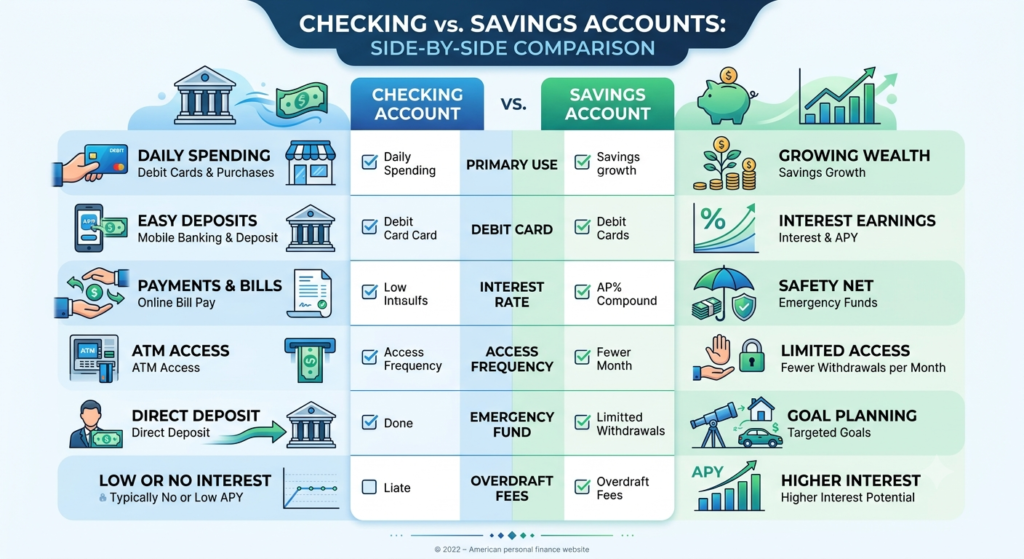
The following table highlights the major differences between the two account types.
| Feature | Checking Account | Savings Account |
|---|---|---|
| Primary purpose | Daily spending | Saving money |
| Debit card | Yes | Sometimes |
| Bill payments | Yes | Limited |
| Interest earnings | Occasionally | Usually |
| ATM access | Frequent | Limited |
| Monthly transactions | Frequent | May have restrictions depending on the institution |
| Best for | Everyday expenses | Long-term savings |
Although both accounts provide secure places to store money, their intended uses are quite different.
Advantages of a Checking Account
Checking accounts offer convenience for managing day-to-day finances.
Benefits include:
- Immediate access to funds
- Convenient debit card purchases
- Easy bill payments
- Payroll direct deposit
- Mobile banking and budgeting tools
- Large ATM networks
If you regularly pay bills or make purchases, a checking account is an essential financial tool.
Advantages of a Savings Account
Savings accounts encourage disciplined saving while helping your money grow.
Key advantages include:
- Earn interest on deposits
- Separate savings from spending
- Build an emergency fund
- Prepare for future financial goals
- Reduce unnecessary impulse purchases
Keeping savings separate from your spending account can make it easier to stay on track financially.
Which Account Should You Choose?
The answer depends on your financial goals.
Choose a checking account if you:
- Receive regular paychecks
- Pay bills each month
- Use a debit card frequently
- Need quick access to your money
Choose a savings account if you:
- Want to earn interest
- Build an emergency fund
- Save for major purchases
- Keep spending money separate from long-term savings
For most people, using both accounts together provides the best balance between convenience and financial growth.
Tips for Managing Both Accounts
Combining checking and savings accounts can improve your financial habits.
Consider these strategies:
- Deposit your paycheck into checking.
- Schedule automatic transfers to savings each payday.
- Keep three to six months of expenses in an emergency fund.
- Review your account balances regularly.
- Monitor fees and interest rates.
- Set savings goals and track your progress.
Automation can help you save consistently while simplifying your monthly budget.
Frequently Asked Questions
Is a checking account better than a savings account?
Neither is better overall—they serve different purposes. Checking accounts are ideal for everyday spending, while savings accounts are designed for building long-term financial security.
Can I have both accounts?
Yes. Many people use both a checking account for daily expenses and a savings account for emergency funds and future goals.
Which account earns more interest?
Savings accounts generally offer higher interest rates than checking accounts, especially high-yield savings accounts.
Are checking and savings accounts insured?
Yes. Accounts held at eligible FDIC-insured banks or NCUA-insured credit unions are protected up to applicable insurance limits.
Can I transfer money between my accounts?
Most banks allow easy transfers between linked checking and savings accounts using online or mobile banking.
Final Thoughts
When evaluating a Checking vs Savings Account, the best choice isn’t usually one or the other—it’s using both strategically. A checking account provides the flexibility needed for everyday spending, while a savings account helps grow your money through interest and supports important financial goals.
By understanding the strengths of each account type and choosing options with competitive features, low fees, and convenient digital banking tools, you can build a stronger financial foundation and manage your money more effectively in 2026.