
Loneliness is a health crisis for older Americans. Research consistently shows that chronic social isolation increases the risk of dementia, heart disease, depression, and premature death — at rates comparable to smoking. The Senior Companion Program was built specifically to address this.
Run by AmeriCorps Seniors (formerly RCSM), it matches low-income senior volunteers with isolated or homebound older adults in their communities. Both sides benefit — often more than either expects.
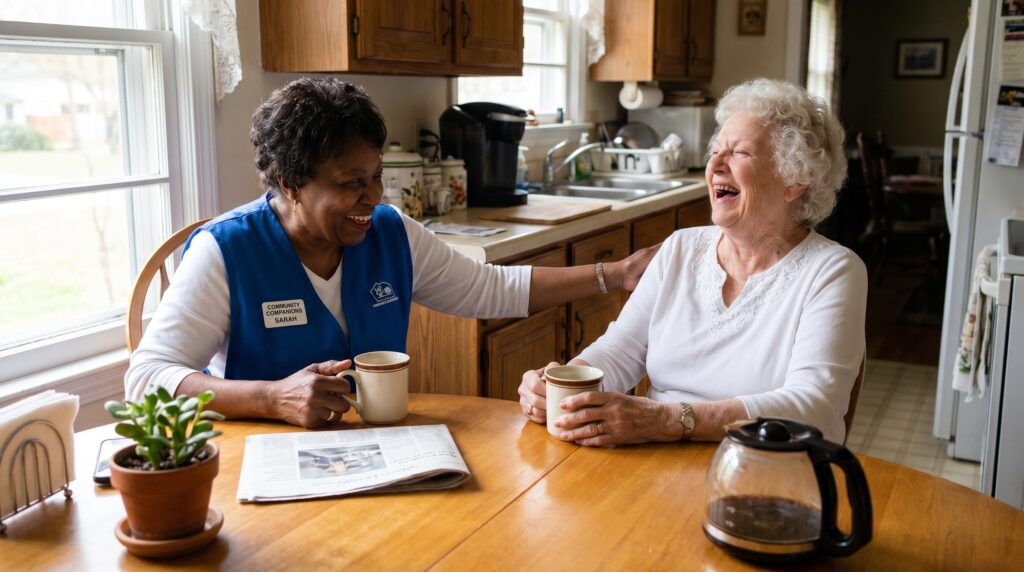
What the Senior Companion Program Does
Senior Companions are volunteers aged 55+ who provide friendly visits, conversation, and limited assistance to adults — typically other seniors — who are isolated, homebound, or living with a disability or chronic illness. They aren’t providing medical care or personal care services. They’re providing human connection — and in the context of senior health outcomes, that distinction matters less than you’d think.
A typical Senior Companion might:
- Visit a homebound senior several times a week for conversation and company
- Accompany a senior to medical appointments
- Help with light tasks like reading mail or making phone calls
- Provide relief and social support that reduces the burden on family caregivers
- Serve as an early warning system — noticing changes in a client’s condition that family members who don’t visit regularly might miss
Volunteer Eligibility and What You Receive
To be a Senior Companion volunteer, you must:
- Be age 55 or older
- Meet low-income guidelines (currently set at 200% of federal poverty guidelines in most programs)
- Be able to serve 15–40 hours per week
- Pass a background check
What Senior Companion volunteers receive in return:
- Tax-free hourly stipend — approximately $3.00 per hour. It’s modest, but it’s income that does not affect Social Security or most means-tested benefit eligibility because it’s exempt from federal income tax.
- Mileage reimbursement for travel to assignment sites
- Meals during service hours
- Accident and liability insurance while volunteering
- Annual physical examination to ensure fitness for service
Many Senior Companion volunteers cite the program’s impact on their own wellbeing as equal to — or greater than — the financial benefits. Having meaningful purpose, regular social interaction, and a community of fellow volunteers significantly reduces the isolation that affects many low-income seniors.
Getting a Senior Companion for a Loved One
If you have a parent or family member who is isolated, homebound, or would benefit from regular social visits, the Senior Companion Program can provide that connection at no cost to the family.
To request companion services for a loved one, contact your local program (search below). Most programs do an intake assessment to match the client’s needs and personality with an appropriate companion. The matching process is taken seriously — compatibility matters for the relationship to be beneficial.
The program is not a substitute for medical care or personal care services — it’s supplemental. But the social and psychological benefit for a homebound older adult who receives regular, consistent friendly visits is well-documented in the research literature.
How to Find a Senior Companion Program Near You
The Senior Companion Program operates through local sponsoring organizations — nonprofit agencies, local governments, and community organizations that manage the program in their area. Program availability varies by location; not every county has one.
- Visit americorps.gov/serve/americorps-seniors and use the program locator
- Contact your local Area Agency on Aging — they maintain directories of community programs including Senior Companions
- Call the Eldercare Locator at 1-800-677-1116 (a free national service) for referrals in your area
Frequently Asked Questions
Q: Does the Senior Companion stipend count as income for SSI or Medicaid eligibility?
No. The Senior Companion stipend is specifically excluded from income calculations for SSI (Supplemental Security Income), Medicaid, and most other means-tested benefit programs. This makes it one of the rare income sources that doesn’t create a benefit cliff for low-income seniors.
Q: Is the Senior Companion Program the same as Foster Grandparents?
No — both are AmeriCorps Seniors programs, but they serve different purposes. Foster Grandparents work with children who have exceptional needs in school and early childhood settings. Senior Companions work with isolated adults who need social support and friendship. RSVP (Retired Senior Volunteer Program) is a third AmeriCorps Seniors program for broader community service.
Q: I’m above the income limit — can I still volunteer with isolated seniors?
The Senior Companion Program’s stipend and benefits require meeting income guidelines. But the RSVP program has no income requirements and also connects volunteers with opportunities to support isolated seniors. Contact your local volunteer center for options that match your situation.